When the United States was thrust into war in 1941, leaders immediately realized they would need an organization that could not only collect, analyze, and disseminate tactical intelligence information to field commanders, but conduct counterintelligence operations to flesh out enemy informants and spies. As such, the U.S. Army Counterintelligence Corps was born on January 1, 1942.
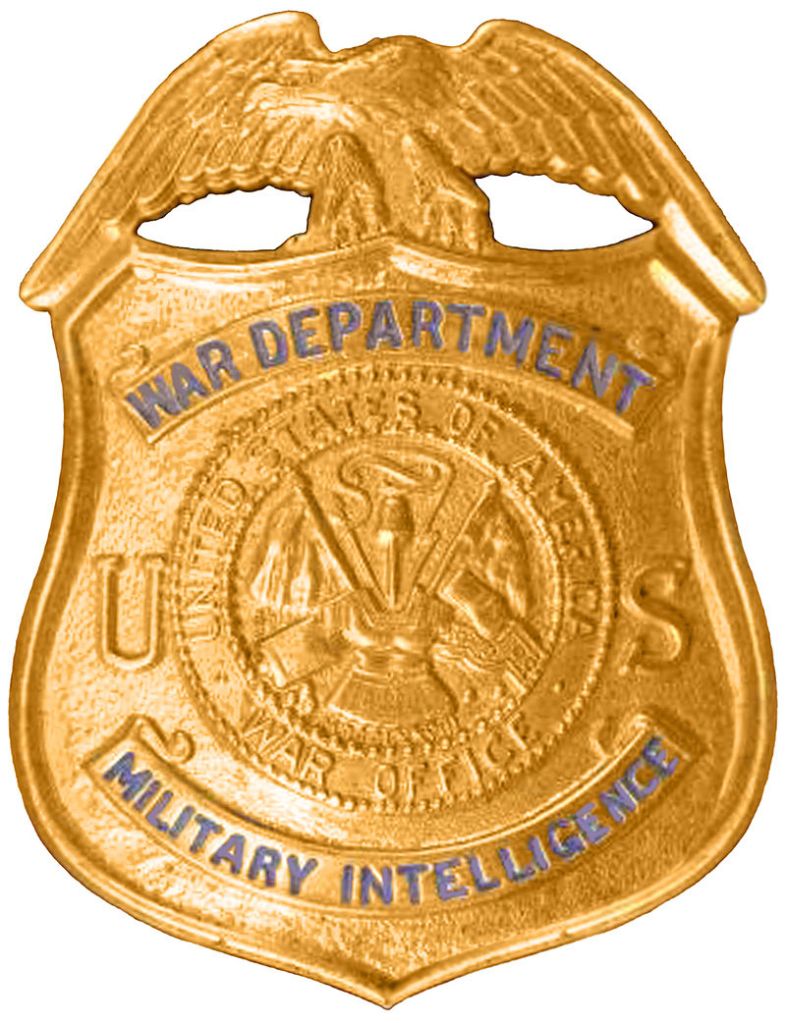
The Counterintelligence Corps, or CIC had an initial complement of about 550 officers and 4,440 enlisted men. Because so many of the men were enlisted, and held relatively low rank, they wore plain clothes or uniforms without any rank designation. When asked for identification, they would flash their badge and identify themselves as “agent” or “special agent.”
The CIC had great latitude to conduct its operations during World War II and they were often described as being an “army within the army.” CIC detachments were deployed at all levels and throughout all theaters of operations. CIC agents, who often possessed foreign language skills, interrogated captured enemy soldiers and translated captured enemy documents to provide tactical intelligence to field commanders. The CIC also provided security for the Manhattan Project, which produced the world’s first nuclear weapons. After the war, CIC agents helped locate German rocket scientists and other experts in nuclear weaponry and cryptography.
In Grown Men Cry Out at Night, Caspar Lehman is CIC agent who has been assigned to lead a newly formed unit, the 323 CIC Detachment (a unit which actually existed by the way) in Bremen Germany. Lehman has been fighting in the war since the very beginning and took part in the Battle of the Bulge and the liberation of the Dachau concentration camp. You will see that his war experiences have left him with what would have been described in his day as “battle fatigue” or “shell shock.” Today, we know his symptoms to be those of post-traumatic stress.